
Your working memory is a desk. For most people, it’s a decent-sized desk. They can arrange many items on it. They can put a sticky note on it that says “Buy Floss”, cover it with a book, do some work, move the book, and oh look, there’s the note. “Buy Floss”.
If you have ADHD, things will be a little different. Your desk is made of Teflon. And it’s tilted at a 45-degree angle. And there is a shredder at the bottom.
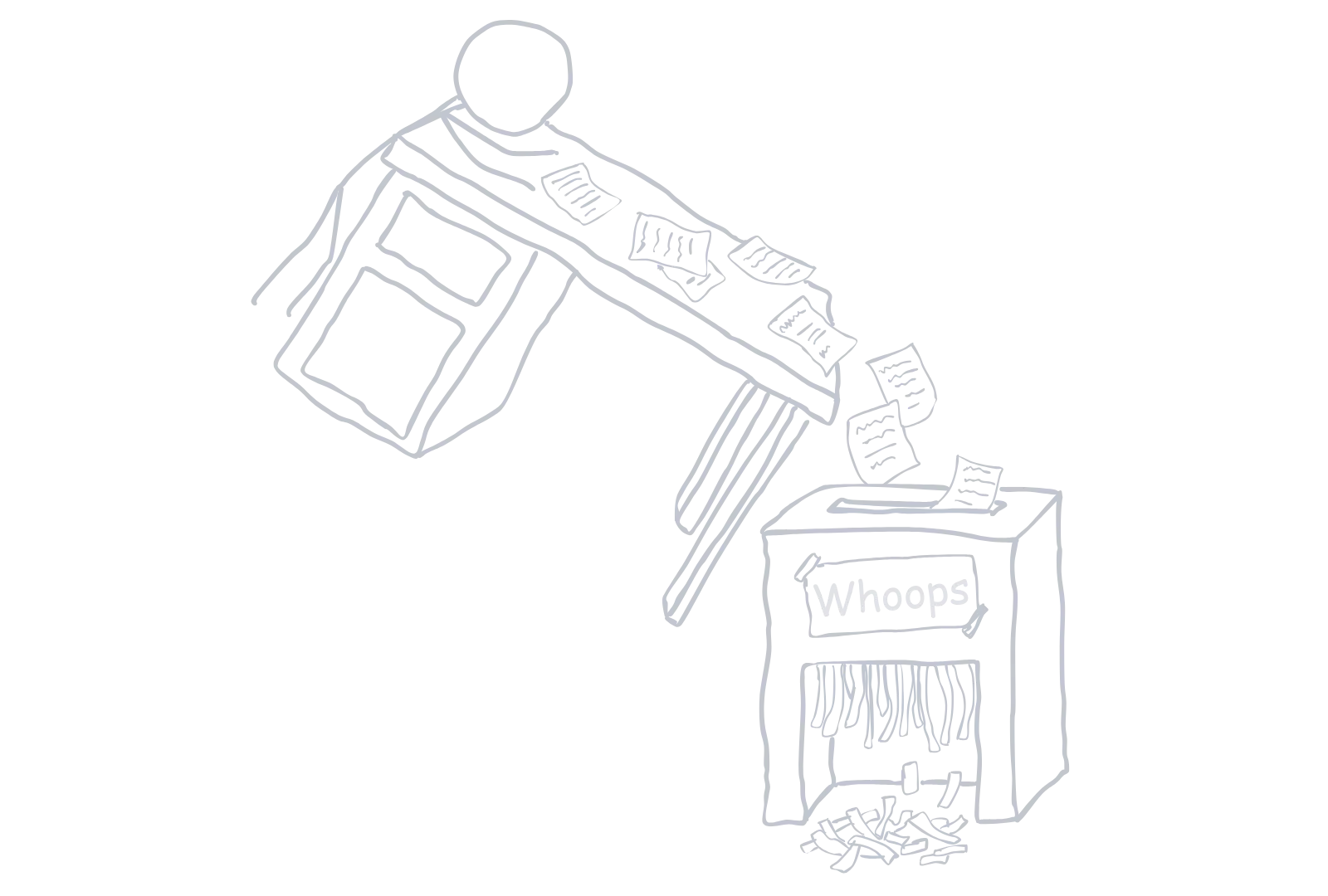
You put the “Buy Floss” note on the desk. You blink. The note slides off into the shredder. You don’t just forget to buy floss; the concept of floss ceases to exist until you want to do your teeth before bed and realize you have once again made your dentist happy.
The Object Permanence of Tasks
Psychologists talk about “Object Permanence”, the understanding that things continue to exist even when you can’t see them. Babies learn this around 8 months old. Before that, if you hide a toy behind your back, to them, it has literally vanished from existence.
ADHD brains often struggle with a concept called “Object Constancy” or what some affectionately call “Object Permanence for Tasks”. If a task, a goal, or a habit isn’t directly in your visual field, it doesn’t exist. It’s not that you’re lazy or don’t care. It’s that your brain has aggressively decluttered it to make room for the shiny new thought that just walked in.
Externalizing the Executive Function
Since we can’t fix the Teflon desk, we have to stop using it. We need to offload the job of “remembering this is important” to something that isn’t our brain. We need to externalize it.
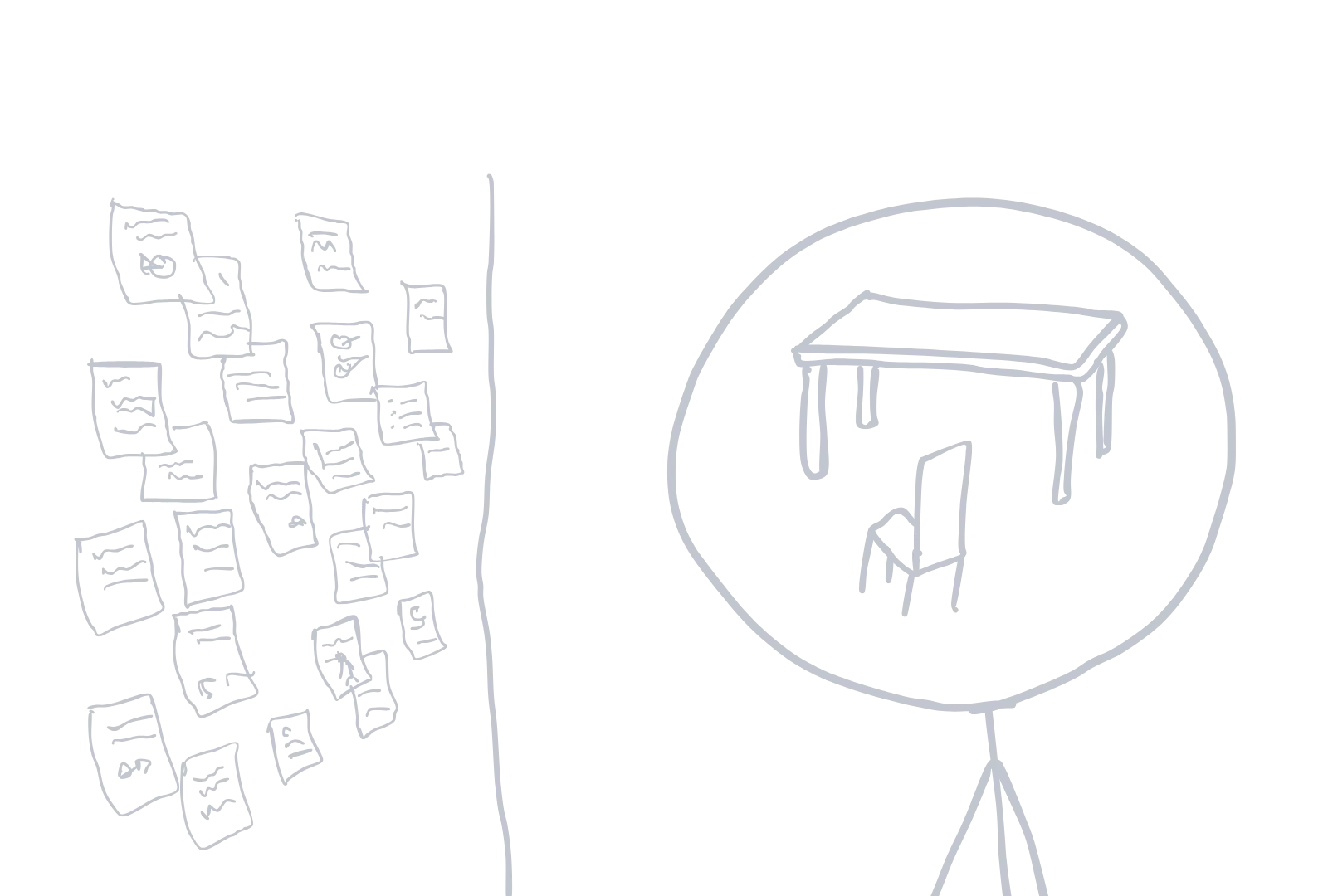
This is where the two pillars of our philosophy come in: Quantifying and Visualizing.
1. Quantifying: Making the Invisible, Visible
“I want to drink more water” is a vague, slippery thought. It slides right off the desk. In fact, it never even lands there. “I have drunk 0 glasses of water today” is a fact. It has edges. It’s concrete.
When you track something (whether hours of deep work, glasses of water, or time spent reading) you turn a fuzzy intention into hard data. Our brains (even the ADHD ones) are surprisingly good at pattern recognition. If you see a “0” where there should be a “5”, a different part of your brain kicks in. The part that wants to fix the pattern.
2. Visualizing: The Information Radiator
But tracking isn’t enough if the tracker is hidden inside an app, inside a folder, on the third page of your home screen. That’s just putting the sticky note in a drawer. The shredder will still get it.
You need an “Information Radiator”. A display that blasts the information to you without you having to ask for it. It needs to be part of your physical environment. Like a clock on the wall. You don’t “check” the clock; you just know the time because it’s there.
And then there was Sabzi
This is why we built Sabzi. Not to be another app you have to remember to check, but to be a piece of furniture in your digital and physical life.
With the Sabzi Hub, we took the dashboard out of the phone and put it on your desk. It sits there, glowing gently, telling you exactly how long you’ve been focusing, or how many tasks you’ve finished today. It bypasses the leaky working memory and goes straight to your visual cortex.
It’s not about shaming yourself into productivity. In fact, we always encourage tracking and monitorting things you’d be proud of doing. Seeing your progress should make you feel good, lack of progress should be a neutral data point. It’s about giving your brain the anchor it needs to stay in the reality you want to be in. It’s about making sure that “Buy Floss”, or “Read a bit this week”, or “Keep hydrated” doesn’t slide into the shredder.